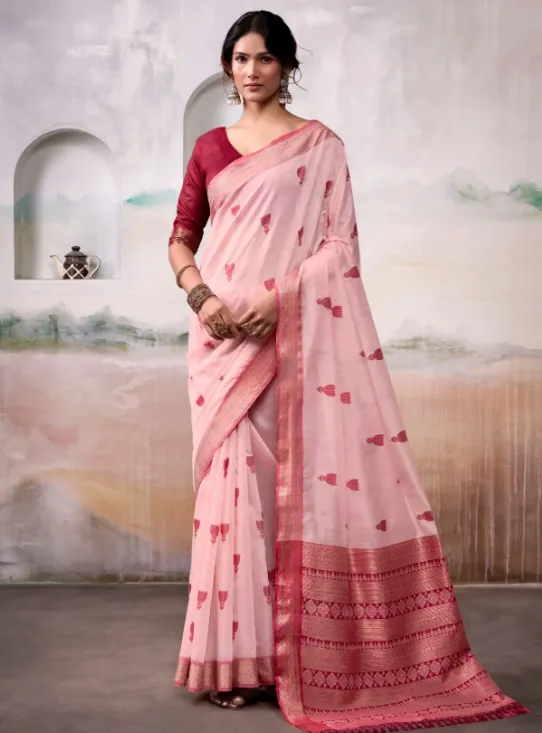
The word “plain” sounds like a promise of uninterrupted colour, but online clothing categories do not always work that way. A Plain Saree selection can include woven motifs, contrasting borders and even printed designs. That matters when you are hoping for a blank canvas for jewellery or a patterned blouse. Instead of trusting the category name, examine the body, border and pallu separately. You may find the quiet effect you want in a design that has far more detail than its label suggests.
Understand the Plain Label
Consider a cream cotton design listed among simpler sarees. Its body has delicate woven motifs, while a green woven border and pallu bring a strong contrast. It is understated beside a heavily embroidered outfit, yet it is not completely undecorated. That distinction is useful when planning what to wear with it. A plain blouse might let the green edge stand out; a printed blouse could create a busier finish. Read the product description alongside the photographs, particularly if you want an entirely solid drape.
Inspect the Woven Motifs
Another design in the same selection is purple soft silk with small golden coin motifs scattered across the fabric. A green border and geometrically woven zari pallu give it a surprisingly elaborate finish. From a distance, the purple dominates; closer up, the gold catches your eye. That is why the word “plain” needs context. Look for a photograph taken with the pallu open and one with it folded. Those two views reveal whether the decoration remains subtle once the garment is actually worn.
Silk Describes the Fabric
A Silk Saree collection classifies garments by material rather than by how heavily they are decorated. For instance, a mustard-yellow silk design carries zari weaving, golden motifs and a contrasting maroon border. Its maroon blouse fabric also includes subtle zari work. The listed saree length is 5.5 metres, with 0.80 metre of unstitched blouse material. None of those details make silk the opposite of plain: the same fabric family can accommodate quiet surfaces, prominent motifs or elaborate borders. Compare actual designs instead of category names.
Check What Arrives Unstitched
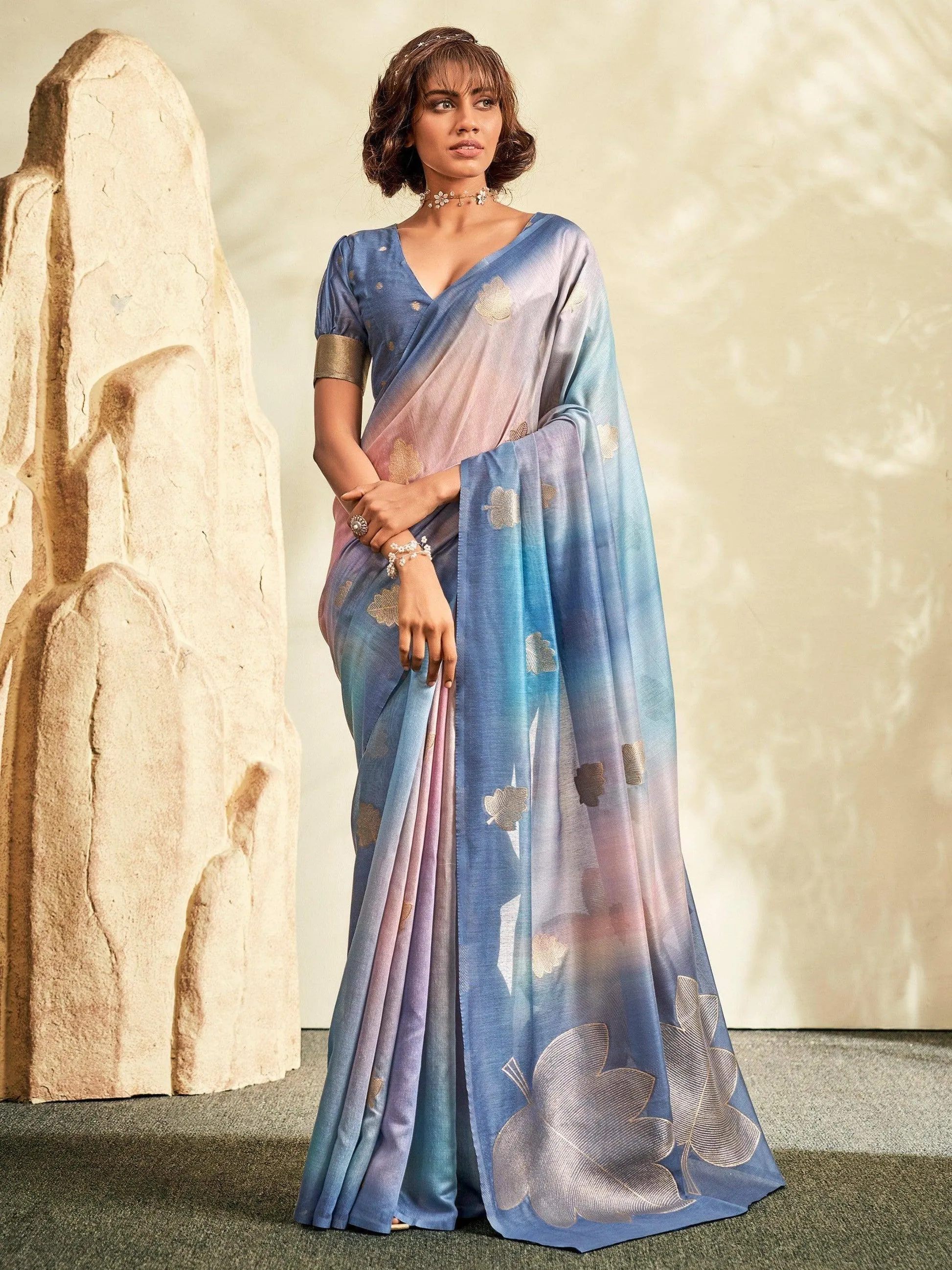
The cream cotton example includes complementary blouse fabric, while the mustard silk design specifies an unstitched blouse piece. That means the finished blouse in a photograph may not be what arrives in your parcel. Check the selected variant and whether stitching is an additional service. If you own a suitable blouse, compare its shade and neckline against the pallu before paying for another. Otherwise, show your tailor the fabric allowance and your preferred sleeve length. A purchase begins with knowing which pieces need work.
Let the Border Guide Styling
Borders change how restrained an outfit appears, even when the central fabric has little decoration. The cream saree’s green edge could be echoed by small stone earrings, while the mustard silk’s maroon border creates an obvious option for a contrasting blouse. Neither needs a necklace simply because the occasion is festive. Lay your favourite accessories beside a full-length photograph, then remove the piece that competes most with the pallu. This keeps the focus on the detail you chose the saree for in the first place.
Keep a Clear Comparison Record
If several listings look similar, save a small comparison instead of relying on the product titles. Write down what is woven, printed or embroidered, and note whether the pallu differs from the main body. Include the stated fabric, blouse allowance and selected stitching option. This separates visible appearance from construction and reduces the chance of ordering a garment that behaves differently from what you pictured. The five details below are enough to compare two favourites without turning a simple purchase into an exhausting search.
-
Fabric named in specifications
-
Motifs across the body
-
Border and pallu design
-
Included blouse material
-
Selected stitching option
Conclusion
Before checking out, close the collection pages and reopen only the two product descriptions you genuinely like. Put their full-length photographs side by side and describe each in a sentence without using the category name. Perhaps one is cream cotton with a green woven edge, while the other is mustard fabric with maroon zari detailing. That tells you what you are actually choosing. Confirm the blouse and care instructions, then pick the one whose particular colours and texture you would be pleased to wear again.