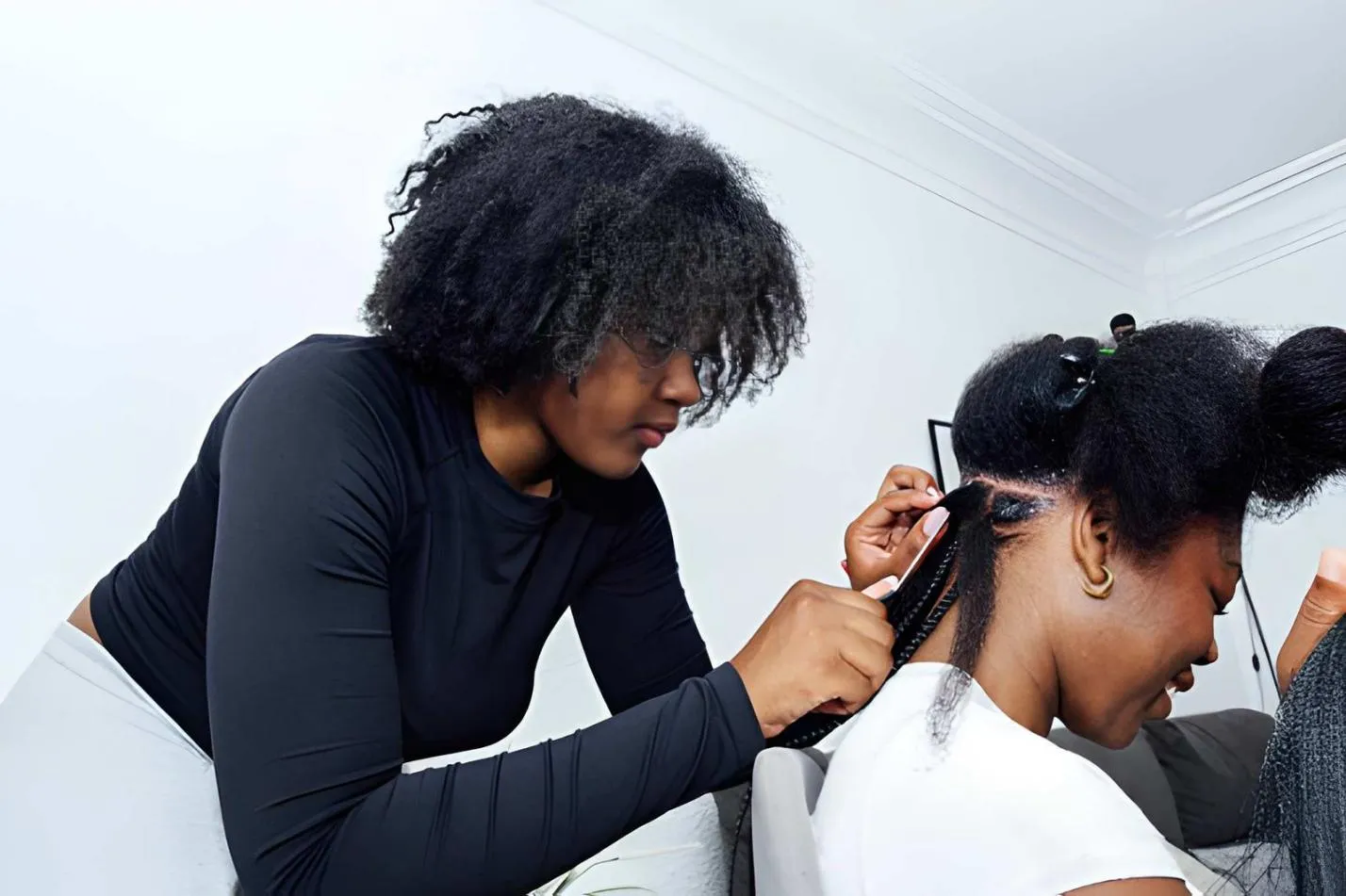
The beauty retail market is becoming more specialized as Black women ask for hair products that reflect the full range of natural textures, styling routines, and personal preferences. Shoppers are no longer satisfied with broad categories that place every curl, coil, wave, and straightened texture under one label. They want extensions that blend convincingly, support their desired hairstyles, and reduce the amount of manipulation needed during installation. This demand is encouraging retailers to develop more focused collections, improve product descriptions, and organize inventory around realistic texture needs. For emerging and established beauty businesses, specialization is becoming more than a branding strategy—it is a practical response to customers who are better informed and more selective about what they purchase.
Natural-Hair Consumers Are Rejecting One-Texture-Fits-All Retail
Textured and natural hair can differ greatly in density, strand thickness, curl formation, shrinkage, and styling behavior. A search for Natural Hair Extensions For Black Woman usually reflects a desire for more than a general extensions category. Customers may be looking for kinky straight, kinky curly, coily, relaxed straight, or blowout textures that complement specific hair goals. This creates room for specialist businesses to organize products around real texture needs.
Traditional extension retail often focused on a limited selection of silky straight, loose wave, and standard curly products. Although these options remain useful, they do not represent every way Black women wear their hair. A shopper with a fluffy blowout may need a different finish from someone wearing defined coils, a silk press, or a twist-out. When these differences are ignored, customers may receive hair that requires excessive heat, product, or manipulation to achieve a reasonable blend.
Specialized retailers can address this problem by creating clearly defined collections. Instead of asking shoppers to guess which product might work, businesses can explain the appearance, density, curl pattern, recommended use, and expected maintenance of each texture. This makes the shopping experience easier while positioning the retailer as a knowledgeable resource rather than simply another seller of hair products.
Better Texture Categories Create More Confident Purchases
Customers are more confident when product categories reflect recognizable styling needs. Labels such as coily, kinky straight, stretched natural, blowout, relaxed straight, and silk-pressed provide more useful guidance than descriptions like “curly” or “natural.” Detailed categories help shoppers narrow their choices before comparing length, color, construction, and price.
Textured-hair collections can also be divided according to curl definition and styling purpose. For example, Kinky Curly Hair Extensions may appeal to shoppers who want springy curls, natural-looking fullness, and a pattern that complements tightly curled hair. Presenting this option as a distinct category helps customers understand how it differs from loose curly, deep wave, or coily products.
Focused product organization can reduce uncertainty in several important ways:
-
Customers can compare textures based on their natural hair or intended style.
-
Product images can demonstrate realistic blending and finished results.
-
Care instructions can be tailored to the behavior of each texture.
-
Retail teams can provide more accurate recommendations.
-
Shoppers are less likely to order an unsuitable product by mistake.
These improvements can reduce preventable returns and exchanges. They may also increase customer satisfaction because buyers understand what they are ordering and how the hair is expected to perform.
Specialization Encourages Smarter Product Development
As texture matching becomes more important, beauty businesses must think beyond adding more products to their catalogs. Effective specialization requires thoughtful product development. Retailers need to consider fiber quality, curl consistency, density, weft construction, closure compatibility, color options, and how the hair responds to washing or styling.
Customer feedback plays an important role in this process. Reviews, support questions, consultations, and return reasons can reveal where current collections are falling short. When several shoppers request a fuller blowout texture or a curl pattern between two existing options, that information can guide future sourcing and testing. Businesses that listen carefully can develop products around demonstrated needs rather than assumptions.
Specialized retail also creates opportunities for coordinated product systems. A customer may prefer to buy matching bundles, closures, clip-ins, frontals, or wigs from the same texture family. Offering these related items together can simplify purchasing and improve the likelihood of a consistent finished style. It can also support higher-value orders without relying on aggressive sales tactics.
Strong product education is equally important. Retailers can provide:
-
Texture comparison guides
-
Close-up photographs and styling videos
-
Density and length recommendations
-
Installation and blending advice
-
Texture-specific washing and maintenance instructions
This educational approach helps customers make informed decisions while strengthening the retailer’s reputation for expertise.
A Better Way Forward
The growth of specialized natural-hair retail reflects a broader change in the beauty industry. Black women are asking businesses to recognize that textured hair is not one uniform category. It includes many patterns, finishes, densities, and styling traditions, each with different product requirements. Retailers that understand these distinctions are better prepared to serve customers with accuracy and respect.
For beauty businesses, the opportunity is not simply to carry more extensions. The greater opportunity is to build organized, well-explained collections that solve specific blending and styling problems. Clear texture categories, coordinated products, realistic imagery, and useful education can make purchasing easier while encouraging long-term customer trust.
As consumer expectations continue to rise, specialized product development will become increasingly valuable. The businesses that succeed will be those that treat texture matching as an essential part of product quality—not an optional marketing detail. By responding to real hair needs, retailers can create a more inclusive shopping experience and a stronger foundation for sustainable growth.